

Why Product Design in Business Strategy Matters
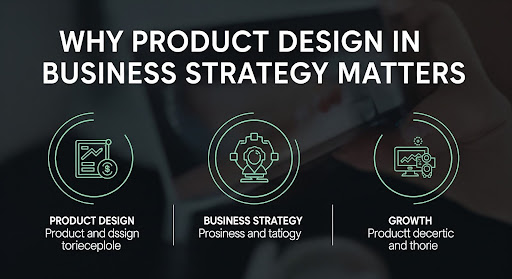
In today’s fast-moving market, product design isn’t just about visuals or usability—it’s a strategic advantage that directly influences business growth. Design shapes how customers experience your brand, how efficiently your team builds products, and how effectively your company adapts to change.
If you’re exploring how product design can support your company’s goals, our team at Monster Creatives can help you map design to measurable results. You can speak to us here to learn more about aligning design strategy with business impact.
Companies that weave design into their business strategy don’t just create appealing products—they create systems of value. Design thinking empowers organizations to innovate faster, solve real user problems, and achieve sustainable growth. As Wednesday Studio explains, great design sits at the intersection of what customers want and what the business needs to achieve.
The Strategic Role of Product Design in Business
1. Turning Vision Into Value
Every company starts with a vision—an idea of how to make people’s lives easier or better. Product design translates that vision into something tangible, ensuring it connects with real users and drives value. Jason Hopkins describes designers as the bridge between abstract business goals and practical, user-focused solutions.
2. Reducing Risk Through Validation
Design-led teams test ideas early, using wireframes, prototypes, and usability studies before full development. According to Merixstudio, this process saves companies from building features no one needs and ensures resources are spent wisely.
3. Shaping a Recognizable Brand Identity
Consistent design builds trust and recognition. A unified color palette, tone, and user experience can make your product instantly identifiable. Visual Brand Language principles show how cohesive design strengthens brand equity over time.
4. Streamlining Operations and Reducing Costs
Designers think beyond visuals—they consider manufacturability, scalability, and technical constraints. By addressing potential bottlenecks early, they help avoid rework, lower costs, and speed up delivery. This design foresight directly contributes to profitability.
5. Building Loyalty and Retention
User satisfaction and loyalty often come down to design. When a product feels effortless to use, people naturally return to it. DesignRush reports that companies with strong design processes outperform competitors in customer retention.
6. Keeping Businesses Agile
Markets shift constantly, and agile companies thrive because they can adapt fast. Design-led teams work iteratively—testing, learning, and refining continuously. Lanpdt notes that this agility gives companies a competitive edge in uncertain times.
How to Integrate Product Design Into Business Strategy
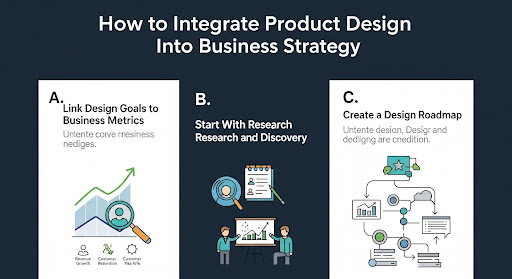
A. Link Design Goals to Business Metrics
Design should contribute directly to measurable outcomes—revenue, retention, conversion, or satisfaction. UXMatters emphasizes setting KPIs for design teams to align creative work with business objectives.
B. Start With Research and Discovery
Don’t guess what users want—research it. Merixstudio highlights how early discovery uncovers opportunities and ensures your product decisions are data-driven.
C. Create a Design Roadmap
A design roadmap connects creative priorities with your company’s business timeline. DesignRush recommends defining short-term usability improvements alongside long-term innovation goals.
D. Encourage Collaboration Across Teams
Great design happens when departments work together. Medium’s Rami Doss explains that designers should collaborate closely with engineering, marketing, and sales to maintain alignment.
E. Iterate and Measure
Design doesn’t stop at launch. The UX Design Institute reminds us that continuous iteration—testing, analyzing, improving—is what keeps products relevant and competitive.
Example: When Design Becomes Strategy
Imagine a logistics company developing an internal dashboard to track fleet performance. The old system was clunky and rarely used.
By bringing in product designers early:
- They discovered that drivers needed real-time alerts, not just reports.
- A simplified interface made key metrics visible at a glance.
- Engagement rose 40%, saving hours in daily operations.
That’s design in action—not decoration, but strategic improvement tied to business outcomes.
Common Pitfalls to Avoid
Pitfall | Why It Happens | How to Fix |
Treating design as an afterthought | Brought in too late | Include design from strategy phase |
No link to KPIs | Design team lacks business context | Tie design metrics to company goals |
Overbuilding features | Trying to please everyone | Use ROI-driven prioritization |
Poor communication | Teams work in silos | Promote cross-functional collaboration |
Hiring a Product Designer Who Understands Business
When hiring, look for designers who:
- Think strategically, not just visually
Show case studies with measurable results
- Communicate the “why” behind design decisions
- Collaborate with technical and marketing teams
If you’d like to explore how design can strengthen your company’s strategy, you can speak to us here — no sales pitch, just a conversation about possibilities.
Product design in business strategy bridges creativity and commercial success. When aligned with clear goals, it becomes a driver of innovation, efficiency, and brand loyalty—not just a visual enhancement.
Companies that embrace design as part of strategy build stronger products, happier customers, and more adaptable teams. To learn more about integrating design and business growth, visit Monster Creatives.